What is the difference between pressure washing and soft washing?
Pressure washing uses higher-pressure water to blast away dirt, stains, and organic growth from durable surfaces like concrete, brick, and pavers. Soft washing uses much lower pressure combined with specialized cleaning solutions to lift algae, mildew, and contaminants from more delicate surfaces such as siding, roofs, and screen enclosures. The right method depends on the material and its condition — applying high pressure where it doesn't belong can damage siding, etch surfaces, or force water behind walls. Sunshine Pressure Washing LLC selects the approach that matches each surface rather than using one technique everywhere.
What exterior surfaces can be pressure washed?
Durable, non-porous surfaces are generally good candidates for pressure washing, including concrete driveways and walkways, brick pavers, pool decks, patios, fences, and some commercial hardscapes. Softer or more sensitive materials — like vinyl siding, stucco, asphalt shingle roofs, painted surfaces, and natural stone — typically call for low-pressure soft washing instead. Condition matters too: aged, cracked, or previously coated surfaces may need a modified approach. A site evaluation helps confirm which surfaces can be safely pressure washed and which require a gentler method.
Can a roof be pressure washed?
High-pressure washing is generally not recommended for asphalt shingle and tile roofs because it can strip protective granules, crack tiles, or force water beneath roofing material. Most Florida roofs are cleaned with low-pressure soft washing, which treats algae and dark streaks without the mechanical stress of high pressure. Tile, metal, and shingle roofs each respond differently, and the cleaning method should match the roofing material and its current condition. This is why roof cleaning is typically approached as a soft-wash service rather than a pressure-washing one.
How often should exterior surfaces be cleaned in Florida?
Florida's humidity, frequent rain, and coastal air accelerate algae, mildew, and salt buildup on exterior surfaces, so cleaning frequency is higher here than in drier climates. Many homeowners schedule house washing and roof soft washing roughly every one to two years, while driveways, sidewalks, and pool decks may benefit from annual cleaning depending on shade, drainage, and proximity to water. Paver sealing typically lasts a few years before resealing is considered, depending on traffic and sun exposure. Actual frequency varies with the surface, surrounding vegetation, and how quickly growth returns.
How often should pavers be sealed?
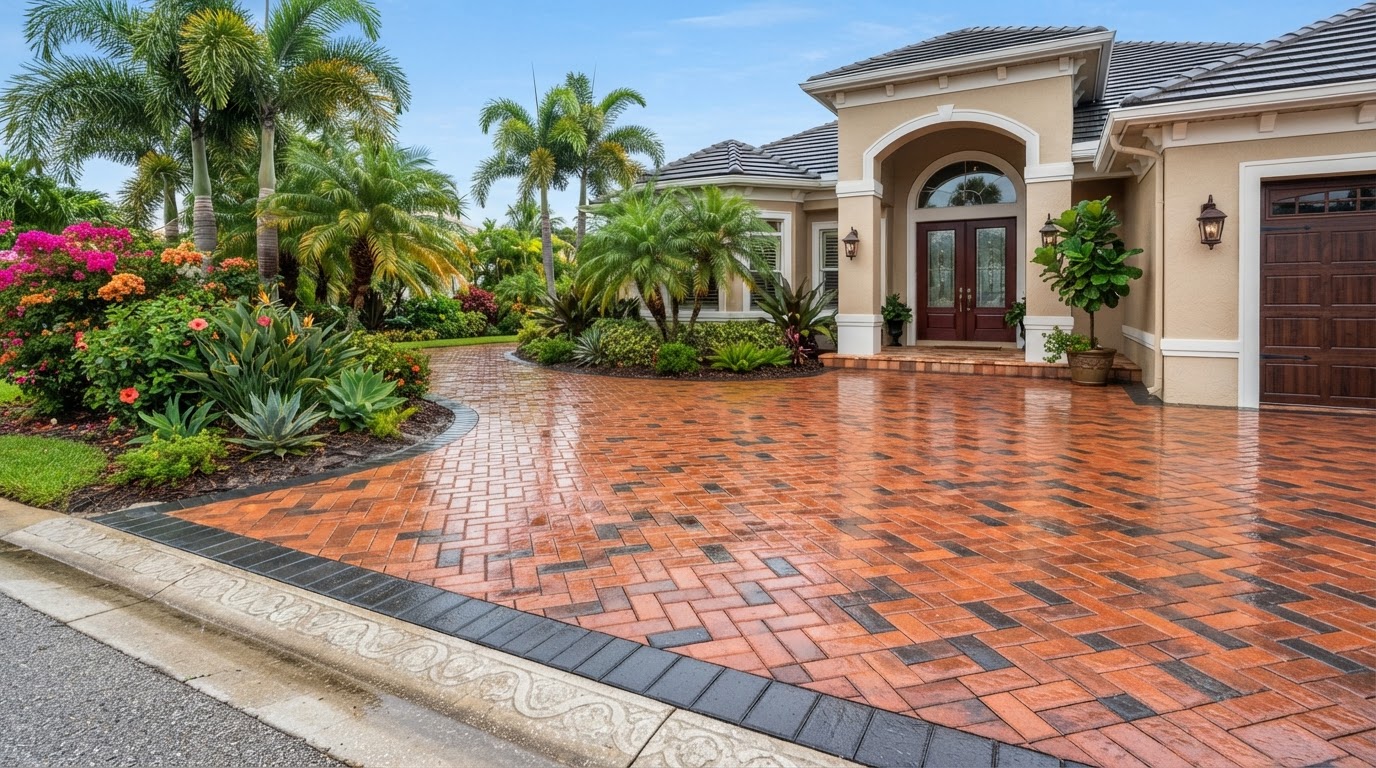
Paver sealer longevity depends on the sealer type, sun exposure, traffic, and how well the pavers were prepared beforehand. A quality sealer on a properly cleaned and re-sanded surface commonly holds up for a couple of years before showing signs of wear, though high-traffic driveways in full sun may need attention sooner. Fading, water no longer beading, and joint sand loss are common indicators that resealing is worth considering. Because conditions vary, an on-site evaluation is the most reliable way to judge whether pavers are due for resealing.
What causes paver sealer to turn white or cloudy?
Cloudy, milky, or white sealer usually results from moisture being trapped beneath the coating, applying sealer over pavers that weren't fully dry, or using a sealer incompatible with the existing surface. Over-application, pooling, and sealing over an older failed sealer can also produce a hazy or blistered appearance. The fix depends on the cause and the sealer chemistry involved — sometimes a corrective cleaning is enough, but more often the failed sealer needs to be stripped and the pavers re-prepared before a fresh coat is applied. Not every cloudy sealer has the same root cause, so evaluation matters.
Can failed paver sealer be removed?
Yes. Failed, peeling, or cloudy sealer can typically be stripped using chemical strippers and controlled surface cleaning, after which the pavers are cleaned, re-sanded, and allowed to dry before a new sealer is applied. The stripping approach depends on the type of sealer originally used — acrylic, water-based, and solvent-based products respond differently — and on how deeply the coating has failed. Proper preparation after removal is what separates a lasting result from a repeat failure, which is why failed sealer removal is usually treated as part of a broader paver restoration.
Do pavers need to be re-sanded before sealing?
In most cases, yes. Joint sand stabilizes pavers, reduces movement, and helps lock the surface together, and cleaning often washes out a portion of the existing sand. Re-sanding with the appropriate joint sand — including polymeric sand where suitable — fills the joints before sealing so the sealer can bond to a stable surface. Skipping re-sanding can leave joints shallow and lead to weed growth and paver shifting over time. The right sand choice depends on the paver type, joint width, and whether the surface is a driveway, patio, or pool deck.
Can pool cages and screen enclosures be cleaned?
Yes. Pool cages and screen enclosures accumulate green algae, pollen, salt, and oxidation on both the aluminum frames and the screen mesh, and they can be cleaned using low-pressure soft washing rather than high pressure that could damage screens or bend framing. The process treats organic growth and brightens the enclosure while protecting the screen material and structure. Because enclosures vary in age and condition, the pressure and approach are adjusted to avoid tearing screens or disturbing the frame.
Can irrigation rust stains be removed?
Irrigation and well-water rust stains — the orange and brown discoloration left by iron-rich sprinkler water on concrete, stucco, pavers, and siding — can usually be removed with targeted rust-removal treatments rather than pressure alone, which often won't lift the bonded mineral stain. The right approach depends on the surface material, since the chemistry that safely treats concrete may not be appropriate for painted siding or natural stone. Evaluating the surface and stain severity helps determine the safest effective treatment.
Do you provide commercial pressure washing?
Yes. Sunshine Pressure Washing LLC provides commercial pressure washing for businesses, storefronts, parking areas, restaurants, drive-thrus, HOAs, condominiums, and apartment communities throughout New Smyrna Beach and the broader service area. Commercial work ranges from storefront and entrance cleaning to parking lot washing and full building washing, and can be structured as recurring maintenance or one-time service. Property managers and business owners can request a free estimate to review the property and cleaning needs.
What areas does Sunshine Pressure Washing LLC serve?
The primary service market is New Smyrna Beach, Florida, with a second location in Edgewater, Florida. The broader service area covers Volusia County and surrounding Central Florida communities, including Edgewater, Port Orange, Oak Hill, Ponce Inlet, Daytona-area communities, DeLand, Deltona, and locations into Seminole and Flagler counties such as Sanford, Lake Mary, Flagler Beach, and Palm Coast. A location service page does not mean the company has a physical office in that city — service is provided from the New Smyrna Beach and Edgewater base.