Efflorescence Removal from Pavers & Masonry New Smyrna Beach
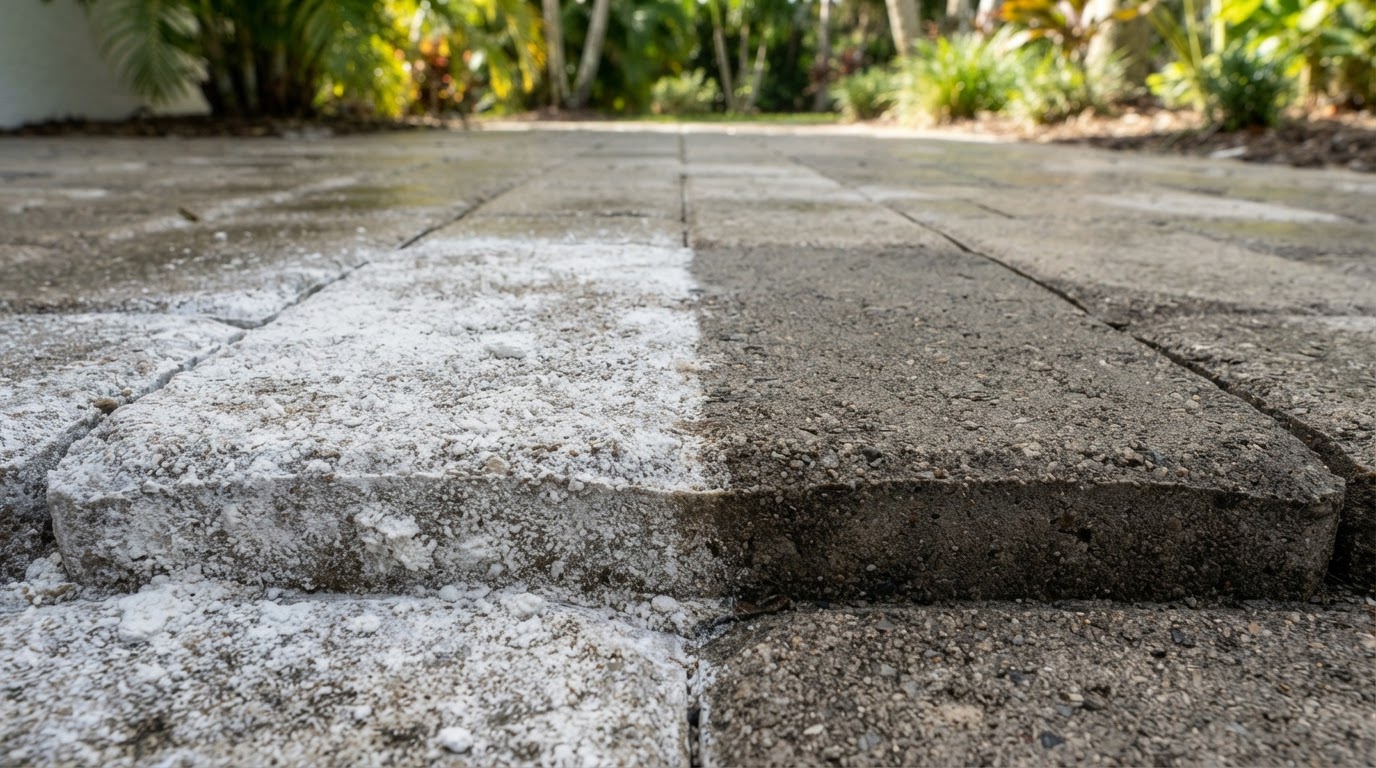
Sunshine Pressure Washing LLC removes efflorescence from pavers, masonry, and exterior hardscapes throughout New Smyrna Beach and the surrounding area. Efflorescence is a mineral or salt deposit that can appear as white powdery, hazy, or crystalline residue on some masonry and paver surfaces. Proper treatment begins by confirming that the discoloration is actually efflorescence rather than failed sealer or another type of staining. Request a free estimate to have your surface evaluated.
Service Overview
What Causes White Efflorescence on Pavers?
Efflorescence is one of the more confusing paver and masonry issues, because it looks like something has gone wrong with the surface — a white powder, haze, or crystalline crust — but it's actually a mineral deposit, not a coating failure or ordinary dirt. Understanding what it is helps explain why it appears and why the right treatment differs from other white stains.
At a high level, efflorescence forms when moisture transports soluble salts through or onto a masonry surface. As the moisture evaporates, the mineral residue is left behind on the surface, appearing as a white powdery, hazy, or sometimes crystalline deposit. The moisture source can vary — it may come from within the pavers or masonry themselves, from the base or setting material beneath them, from groundwater, or from irrigation and runoff. What's consistent is the mechanism: moisture carries soluble salts, evaporation deposits them.
Porous masonry materials are the most common surfaces affected. Concrete pavers, brick, concrete masonry, and natural stone can all show efflorescence because their porosity allows moisture and salts to move through them. The condition can appear on new installations as excess moisture from manufacturing or installation works its way out, and it can also appear on older surfaces when moisture conditions change. It's not a sign that the pavers are defective — it's a natural mineral process — but it is unsightly and can mask the true color of the surface.
What makes efflorescence tricky is that it can resemble other white stains. A cloudy failed sealer can look similar, as can hard-water or irrigation staining, ordinary surface dirt, and even organic growth in some cases. Because the treatments for these conditions differ, correctly identifying efflorescence is the first step — and that's not always possible from appearance alone, which is why the surface is evaluated rather than assumed.
How the Service Works
How Efflorescence Is Evaluated Near New Smyrna Beach
Because efflorescence resembles several other white stains, evaluation focuses on differentiating it from other conditions before any treatment is chosen. Applying the wrong treatment — for example, trying to strip what looks like a failed sealer when the issue is actually mineral deposits — wastes effort and can damage the surface.
Differentiating from Cloudy Sealer
Failed sealer and efflorescence can both appear as a white haze, but they're different problems. A failed coating is a surface film that has deteriorated, while efflorescence is mineral residue deposited from moisture. The evaluation considers whether a coating is present and whether the white material is on the surface or appears to be a deposit. The treatment for each is different, so distinguishing them matters.
Differentiating from Irrigation Rust
Irrigation and well-water staining typically appears as orange or reddish discoloration rather than white, but mineral deposits from water can vary. The color, pattern, and location of the staining are considered to determine whether the issue is efflorescence, irrigation-related staining, or another mineral deposit. Each requires a different approach.
Differentiating from Dirt & Organic Growth
Ordinary surface dirt and organic growth like algae or mildew can create discoloration that may be mistaken for efflorescence, though they usually differ in color and texture. The evaluation considers whether the white material is mineral in nature or biological, and whether cleaning alone would address it. Organic buildup responds to washing, while efflorescence may require specific treatment.
Surface, Sealer & Moisture Conditions
The surface material, any existing sealer, the severity of the deposit, and moisture patterns are all assessed. Because efflorescence is driven by moisture, understanding where the moisture is coming from helps determine whether treatment will be effective and whether the deposit is likely to recur. The age and condition of the surface are also considered.
No strong acid mixtures or DIY chemical formulas are prescribed here. The treatment is selected based on the surface material and the severity of the deposit, and it's applied with attention to not damaging the pavers or masonry. The evaluation determines what the white material actually is before any product is used.
Benefits & Related Services
Efflorescence Removal, Paver Cleaning & Restoration
Efflorescence removal connects to several related services, and the relationship matters because standard pressure washing alone may not resolve mineral deposits. Ordinary cleaning removes surface dirt and organic buildup, but mineral residue can persist after washing — which is why a property owner who has tried cleaning and still sees white haze may be dealing with efflorescence rather than dirt.
After efflorescence is addressed, the surface can be evaluated for paver cleaning and paver restoration if the surface needs broader corrective work. If a failed sealer contributed to the moisture issue or is also present, failed sealer removal may be needed, and if the efflorescence has masked the paver color, color restoration options can be considered once the mineral haze is gone.
One important point: sealing over unresolved efflorescence can create poor visual results. A sealer applied over mineral residue can trap the deposit underneath, where it may continue to form and become visible through or beneath the coating. That's why efflorescence is addressed before paver sealing is considered. And it's important to be clear that sealing doesn't always prevent future efflorescence — if the moisture source persists, the deposit can recur regardless of whether the surface is sealed.
For orange or reddish staining rather than white, irrigation rust and well-water stain removal addresses a different mineral issue. The surface is evaluated to determine which condition is actually present.
Related Exterior Cleaning Services
Removes surface dirt and buildup, though mineral deposits may require specific efflorescence treatment.
Paver RestorationThe broader corrective process that may include efflorescence removal alongside other steps.
Failed Sealer RemovalAddresses cloudy coatings that can resemble efflorescence but require a different approach.
Paver SealingApplied only after efflorescence is resolved, since sealing over mineral residue traps the deposit.
Questions & Answers
Efflorescence Removal FAQ New Smyrna Beach
Direct answers to the questions we hear most about this service. If yours isn't here, request a free estimate and we'll walk through the specifics of your property.
Local Service
Request Efflorescence Removal Near New Smyrna Beach
If you're seeing white powder, haze, or mineral residue on your pavers or masonry, the first step is confirming what it actually is. Sunshine Pressure Washing LLC evaluates and treats efflorescence throughout New Smyrna Beach and surrounding Volusia County communities, and the approach is determined by what's on your surface — whether that's efflorescence, a failed sealer, or another type of staining.
Because efflorescence is often part of a broader surface condition, the surface is evaluated in context before any treatment is applied. Request a free estimate to have your pavers or masonry reviewed, or call to discuss what you're seeing.
Request a Free Estimate
Tell us about your property and the surfaces involved — we'll review the details and follow up with next steps.
Prefer to call?
Speak with us directly about your property. We provide free estimates with no obligation.
Sunshine Pressure Washing LLC386-314-6959
info@sunshinepressure.com
New Smyrna Beach, Florida
Second location: 1231 Willow Oak Dr., Edgewater, Florida