
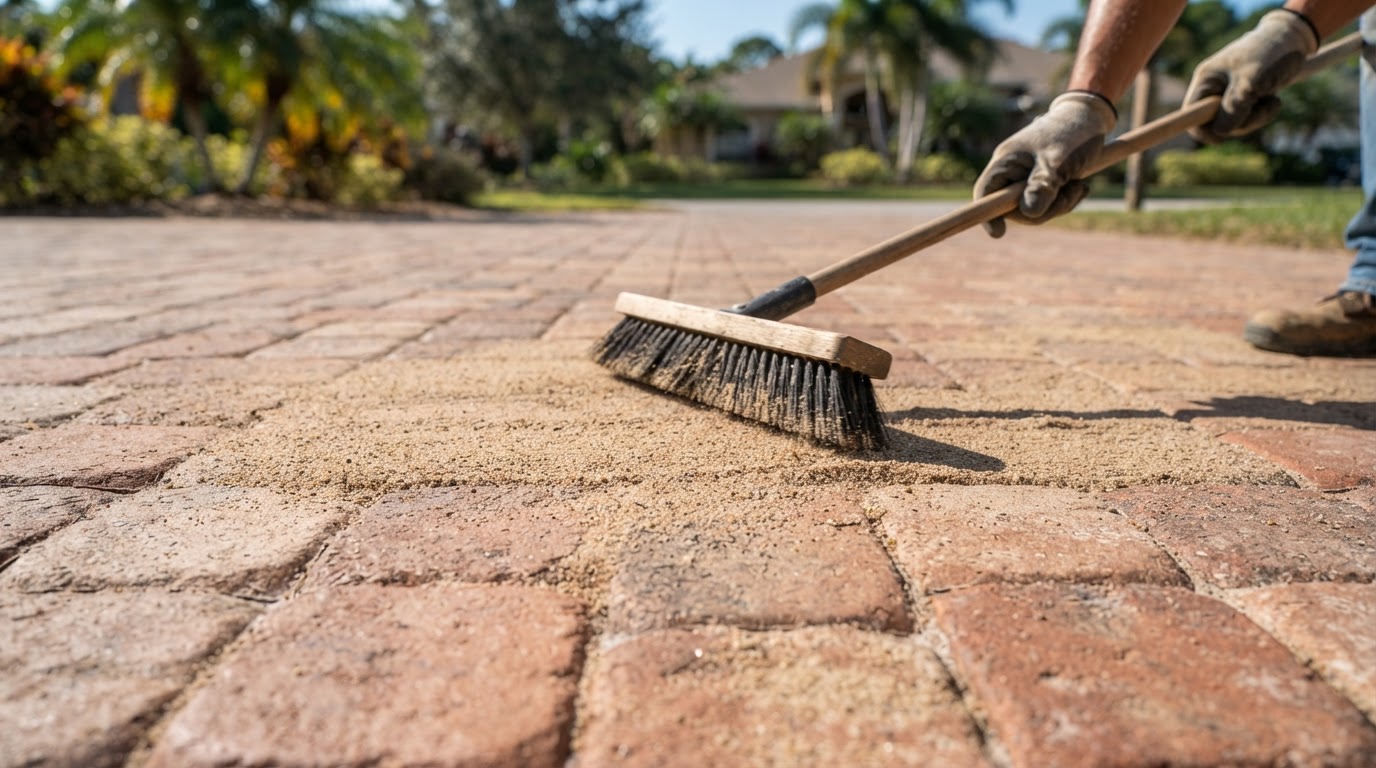
Polymeric Sand Installation for Pavers New Smyrna Beach
Sunshine Pressure Washing LLC installs polymeric sand in paver joints on driveways, patios, pool decks, and walkways throughout New Smyrna Beach and the surrounding area. Polymeric sand is a jointing material used between certain paver installations, and when appropriate for the surface and joint configuration, it can help create a more stable joint system after proper installation and activation. Whether it's the right choice depends on the paver system, joint dimensions, and conditions. Request a free estimate to have your pavers evaluated.
Service Overview
What Is Polymeric Sand?
Polymeric sand is a manufactured jointing material designed for use between pavers. Unlike ordinary joint sand, it contains fine aggregate combined with binding components that, when properly installed and activated according to the product's requirements, form a more stable joint fill. The result can be a firmer joint system that resists washout and helps deter weed growth in the joints — but those benefits depend on correct installation, proper activation, and the sand being appropriate for the specific paver system in the first place.
It's important to be clear about what polymeric sand is and isn't. It is not a permanent solution that eliminates weeds forever, permanently locks every joint, or makes a paver surface maintenance-free. It's a jointing material with specific installation requirements, and its performance depends on the paver type, joint width and depth, drainage, installation conditions, and the product used. When those factors align, it can be an effective choice; when they don't, it can create problems of its own.
The suitability of polymeric sand depends on several factors that are evaluated before it's used. Joint dimensions matter — the material is designed for joints within a certain width range, and joints that are too narrow or too wide may not be appropriate. The paver type matters, because some surfaces and finishes interact differently with the binding components. Drainage and moisture conditions matter, because the activation and curing process depends on controlled water exposure. And any existing sealer or coating in the joints affects whether the sand can bond properly.
Because these variables determine whether polymeric sand is appropriate, the surface is evaluated before it's specified. The exact formulation and chemistry of the product aren't published here — what matters is that the right material is matched to the right paver system, installed correctly, and activated properly for the conditions on the property.
How the Service Works
When Is Polymeric Sand Used Near New Smyrna Beach?
Polymeric sand can be used on a range of paver surfaces, but each application is evaluated for suitability before the material is specified. The common surfaces where it's considered include driveways, patios, walkways, and pool decks — but the fact that a surface is one of these doesn't automatically mean polymeric sand is the right choice.
Joint Width & Depth
Polymeric sand is designed for joints within a specific dimension range. Joints that are too narrow may not accept enough material to bond effectively, while joints that are too wide may not perform as intended. The joint dimensions are measured and evaluated to determine whether the material is appropriate for the installation.
Paver Type & Surface
Different paver materials and surface finishes interact differently with polymeric sand. Some pavers are well suited to the material, while others — certain textured or porous surfaces, for example — may not be. The paver type is identified and considered before the material is selected.
Existing Joint Material & Sealer
What's currently in the joints affects whether polymeric sand can be installed properly. Old sand, debris, or an existing sealer in the joints may need to be addressed first, because the material needs a clean joint to bond correctly. If a failed sealer is present, that may need to be removed before re-sanding makes sense.
Drainage, Moisture & Slope
The activation and curing of polymeric sand depends on controlled water exposure, so drainage, moisture conditions, and surface slope all factor into whether it's appropriate. Areas with persistent standing water or specific drainage patterns may not be suitable candidates. These conditions are evaluated as part of determining whether the material fits the surface.
The evaluation is what determines whether polymeric sand is used. It's not specified by default for every paver surface — it's selected when the paver system, joint dimensions, and conditions support it, and a different joint material may be more appropriate when they don't.
Benefits & Related Services
Polymeric Sand vs. Standard Paver Joint Sand
Polymeric sand and standard joint sand are different materials with different behaviors, and understanding the distinction helps clarify which is appropriate for a given surface. Neither is a universal winner — the choice depends on the paver system and what the joints need.
Standard joint sand is a simpler material — fine aggregate that fills the joints and stabilizes the pavers through friction and compaction. It's straightforward to install and re-sand, and it's appropriate for many installations. Its limitation is that it can wash out over time under heavy water movement, and it doesn't bind actively within the joint.
Polymeric sand adds binding components that, when properly activated, form a firmer joint fill that resists washout more effectively than loose sand. The trade-off is that it has specific installation and activation requirements, and it's not appropriate for every joint configuration or paver type. Installation differences, binding behavior, maintenance considerations, and compatibility with future cleaning and sealing all factor into the decision.
The relationship to sealing also matters. Pavers can be sealed after polymeric sand installation, but the sequence and timing depend on the product and the surface conditions. These services connect through paver re-sanding (the broader joint-replenishment service), paver restoration (the multi-step corrective process), paver cleaning (which prepares the joints), and paver sealing (which can follow once the joints are properly filled). The right material is chosen based on what the paver system can support, not on a default preference.
Related Exterior Cleaning Services
The broader joint-replenishment service that includes evaluating whether polymeric sand is appropriate.
Paver RestorationThe multi-step corrective process that may include polymeric sand as part of joint stabilization.
Paver SealingCan follow polymeric sand installation, with timing and sequence based on the product and surface.
Paver CleaningPrepares the joints for polymeric sand by removing old material, debris, and buildup.
Questions & Answers
Polymeric Sand Installation FAQ New Smyrna Beach
Direct answers to the questions we hear most about this service. If yours isn't here, request a free estimate and we'll walk through the specifics of your property.
Local Service
Request Polymeric Sand Installation Near New Smyrna Beach
If you're considering polymeric sand for your paver driveway, patio, pool deck, or walkway, the first step is evaluating whether it's appropriate for your specific surface. Sunshine Pressure Washing LLC installs polymeric sand throughout New Smyrna Beach and surrounding Volusia County communities, and the material is specified only when the paver system, joint dimensions, and conditions support it.
Because polymeric sand is often part of a broader restoration, the joints are evaluated in context with the rest of the surface. Request a free estimate to have your pavers reviewed, or call to discuss whether polymeric sand fits your installation.
Request a Free Estimate
Tell us about your property and the surfaces involved — we'll review the details and follow up with next steps.
Prefer to call?
Speak with us directly about your property. We provide free estimates with no obligation.
Sunshine Pressure Washing LLC386-314-6959
info@sunshinepressure.com
New Smyrna Beach, Florida
Second location: 1231 Willow Oak Dr., Edgewater, Florida