
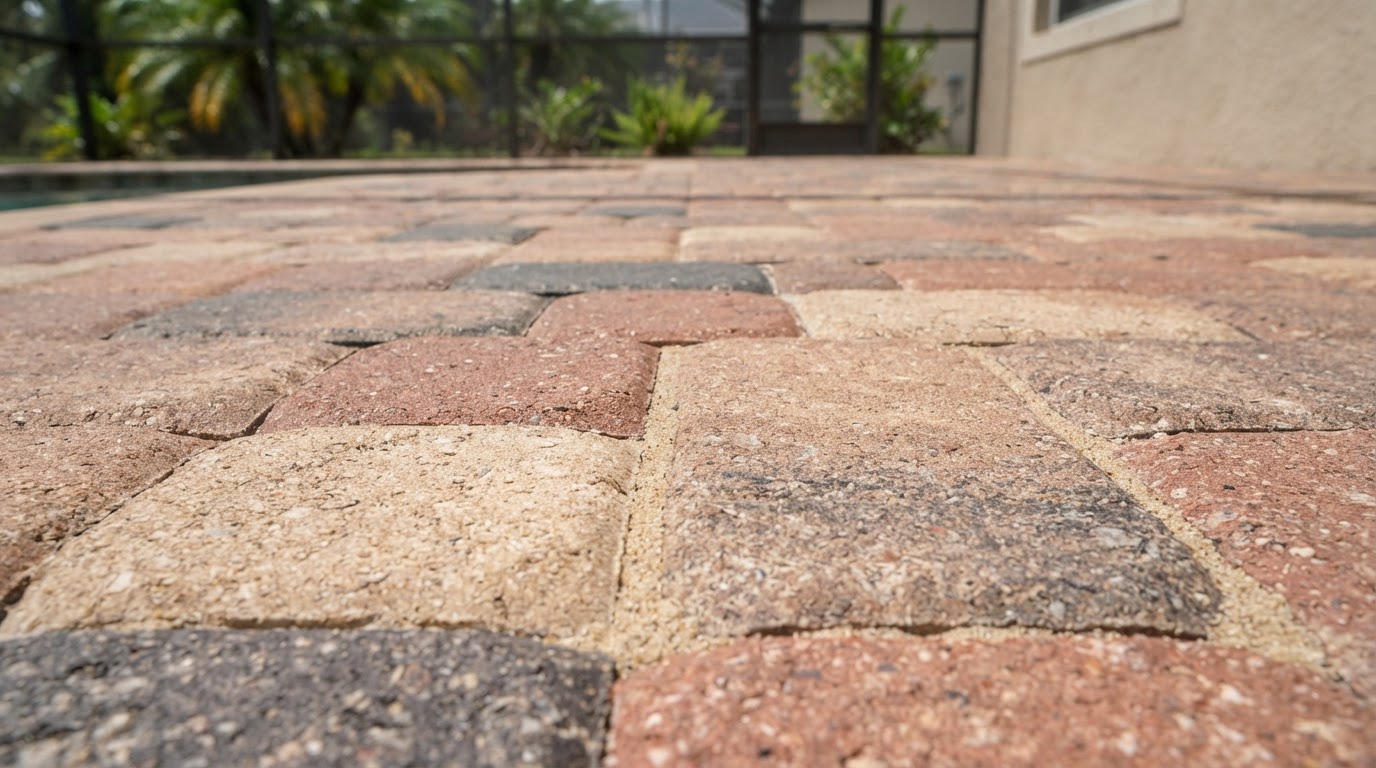
Paver Re-Sanding & Joint Sand Replacement New Smyrna Beach
Sunshine Pressure Washing LLC re-sands paver joints and replaces missing joint sand on driveways, patios, pool decks, and walkways throughout New Smyrna Beach and the surrounding area. Re-sanding replenishes the joint material that has been lost or needs replacement, and it's often part of a larger paver maintenance or restoration process. The appropriate joint material depends on the paver system and condition. Request a free estimate to have your paver joints evaluated.
Service Overview
Why Does Sand Disappear Between Pavers?
The sand between paver joints isn't just filler — it's what locks the pavers in place, distributes load, and keeps the surface stable. When that joint material disappears, the pavers can shift, settle unevenly, and develop gaps that invite weeds and debris. Property owners usually notice the problem when joints look low or empty, when sand appears at the edges of the driveway or patio after rain, or when pavers begin to rock slightly underfoot.
There's no single reason joint sand goes missing, and it's a mistake to assume pressure washing is always the cause. Water movement is a common factor — heavy rain, runoff, or poor drainage can wash sand out of the joints over time, especially on sloped surfaces. Routine cleaning can remove loose joint material if the joints aren't refilled afterward, but so can normal weather exposure, foot and vehicle traffic, and simple aging of the installation. In some cases the original joint sand was never properly installed or has broken down over years of exposure.
The visible signs are fairly consistent regardless of the cause. Joints may look low, recessed below the paver surface, or completely empty. You might see loose material collecting where it shouldn't, uneven sand levels across the installation, or weeds establishing in the gaps where sand used to be. Any of these can indicate that the joint system needs attention — and that the pavers may benefit from re-sanding as part of a broader maintenance or restoration effort.
It's worth noting that missing joint sand can also be a symptom of a larger issue. If the pavers have shifted, if there's a failed sealer holding moisture, or if the base beneath the pavers has settled, simply pouring new sand into the joints won't address the underlying cause. That's why the joint condition is evaluated in context, not treated as an isolated problem.
How the Service Works
How Paver Joint Sand Is Replaced Near New Smyrna Beach
Re-sanding isn't as simple as sweeping sand into the joints and walking away. The process is planned around the condition of the pavers and what the joint system actually needs, and the steps below describe how the work is typically approached.
Cleaning & Preparation
The surface is cleaned first so the true condition of the joints is visible. Built-up dirt, organic growth, and debris in the joints can prevent new sand from settling properly, so preparation matters. If a failed sealer is present, that may need to be addressed before re-sanding makes sense.
Removing Loose Material
Where appropriate, loose or degraded material is removed from the joints so the new sand has a clean space to fill. Joint depth is evaluated — shallow joints, deep joints, and uneven joints each present different considerations for how the sand is installed.
Selecting Joint Material
The appropriate joint material is selected based on the paver type, joint width and depth, drainage, and the intended use of the surface. Traditional joint sand and polymeric sand are different materials with different behaviors, and one isn't automatically right for every installation. The choice depends on what the paver system can support.
Filling & Preparing for Sealing
Joints are filled to the appropriate level, and the surface is prepared for sealing when sealing is part of the project. The timing between re-sanding and sealing depends on the materials used and the surface conditions, and the sequence is planned so the joint material and any sealer work together rather than against each other.
No single sand type is prescribed as a universal solution, because the right material depends on the paver system, the joint dimensions, and the conditions on the property. The joint condition is evaluated before a material is chosen, and the re-sanding is done in context with whatever else the surface needs.
Benefits & Related Services
Paver Re-Sanding, Polymeric Sand & Sealing
Re-sanding connects to several related services, and understanding the distinctions helps clarify what your pavers actually need. Traditional joint sand and polymeric sand are different materials — re-sanding is the broader service of replenishing joint material, while polymeric sand installation is the specific use of a manufactured jointing material that contains binding components. One isn't universally better than the other; the choice depends on the paver system, joint dimensions, drainage, and the surface's intended use.
Re-sanding is also closely tied to paver cleaning and paver sealing. Cleaning prepares the joints for new sand, and sealing can help hold the joint material in place after it's installed — but the sequence matters. Applying sealer over joints that still need sand, or re-sanding over a failed sealer, can create problems that defeat the purpose of both steps.
When missing sand is part of a larger deterioration — failed sealer, faded pavers, efflorescence, or shifting — re-sanding becomes one step in a broader paver restoration. If a failed coating is contributing to the joint problem, failed sealer removal may be needed first. The joint condition is always evaluated in context, so re-sanding supports the rest of the restoration rather than working around an unaddressed issue.
Related Exterior Cleaning Services
The broader corrective process that includes re-sanding alongside cleaning, stripping, and sealing.
Paver SealingHelps hold joint sand in place after re-sanding, applied only after the surface is properly prepared.
Polymeric Sand InstallationA specific jointing material option evaluated based on joint dimensions, drainage, and paver type.
Paver CleaningPrepares the joints for new sand by removing buildup and debris that prevent proper filling.
Questions & Answers
Paver Re-Sanding FAQ New Smyrna Beach
Direct answers to the questions we hear most about this service. If yours isn't here, request a free estimate and we'll walk through the specifics of your property.
Local Service
Get a Paver Re-Sanding Estimate Near New Smyrna Beach
If the joints between your pavers are low, empty, or washing out, the surface may need re-sanding to stay stable — whether on a driveway, patio, pool deck, or walkway. Sunshine Pressure Washing LLC evaluates and re-sands paver joints throughout New Smyrna Beach and surrounding Volusia County communities, and the appropriate joint material is selected based on what your paver system actually needs.
Re-sanding is often part of a broader restoration, so the joints are evaluated in context with the rest of the surface. Request a free estimate to have your paver joints reviewed, or call to discuss what you're seeing.
Request a Free Estimate
Tell us about your property and the surfaces involved — we'll review the details and follow up with next steps.
Prefer to call?
Speak with us directly about your property. We provide free estimates with no obligation.
Sunshine Pressure Washing LLC386-314-6959
info@sunshinepressure.com
New Smyrna Beach, Florida
Second location: 1231 Willow Oak Dr., Edgewater, Florida